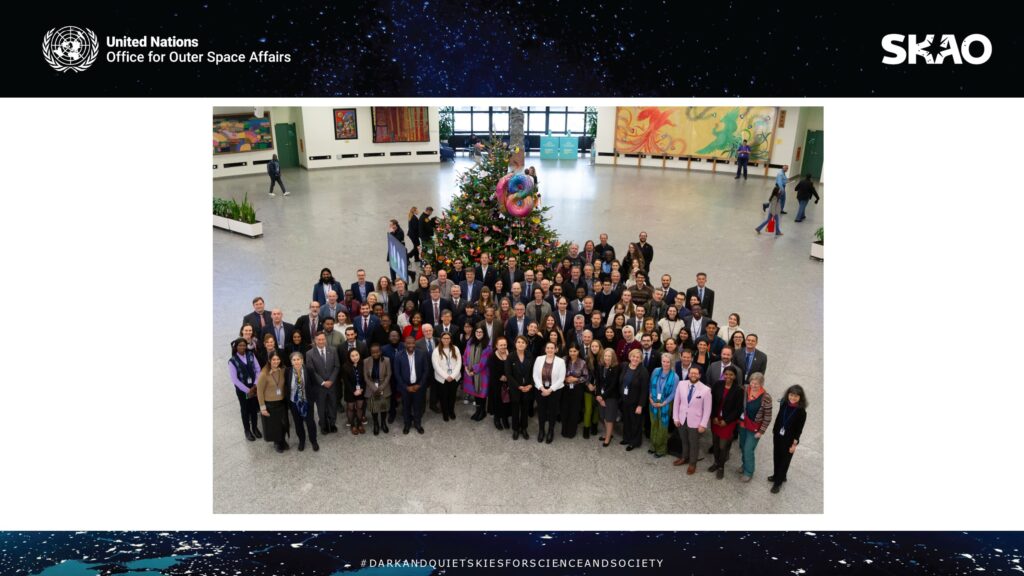


From 8-12 December 2025, Dr Mdhluli participated in the Dark and Quiet Skies for Science and Society workshop hosted by the United Nations Office for Outer Space Affairs (UNOOSA) and the SKA Observatory in Vienna. The workshop brought together international stakeholders from science, policy, development, and civil society to explore how dark and quiet skies can be protected in an era of increasing space activity, while ensuring benefits for both science and society.
On the first day of the workshop, Dr Mdhluli contributed as a panellist representing the IAU Office of Astronomy for Development (OAD) in a session titled “Keeping a balance to preserve the social and cultural use of dark and quiet skies.” The discussion focused on the role of dark skies in supporting the Sustainable Development Goals (SDGs), the socio-economic benefits for local communities, and the importance of recognising the night sky not only as a scientific or economic resource, but also as an element of intangible cultural heritage.
A central theme of the discussion was the need for meaningful and respectful engagement with communities when developing astronomy infrastructure or satellite initiatives. Dr Mdhluli highlighted the importance of genuine consultation, shared agency, and equitable outcomes, ensuring that local communities are not only consulted, but actively involved in shaping initiatives that affect their skies and cultural practices.
In addition to representing the IAU OAD, Dr Mdhluli also participated in discussions on behalf of the African Astronomical Society (AfAS), bringing perspectives from the African astronomy community and highlighting regional priorities, challenges, and opportunities related to dark and quiet sky protection.
Reflecting on the outcomes of the workshop, Dr Mdhluli noted that the five-day engagement provided valuable insight into the work of the IAU Centre for the Protection of the Dark and Quiet Sky (CPS), as well as the many interconnected dimensions involved in safeguarding the night sky. “The discussions highlighted how closely linked policy development, scientific research, regulation, and implementation are when it comes to protecting dark and quiet skies,” Dr Mdhluli explained, adding that the workshop also deepened understanding of the role of the United Nations Committee on the Peaceful Uses of Outer Space (COPUOS) and its ongoing efforts to promote the sustainable use of outer space.
Dr Mdhluli further emphasised that these discussions reinforced a broader message that resonates strongly with the mission of the IAU Office of Astronomy for Development. “Ultimately, protecting dark and quiet skies goes beyond technical or regulatory considerations,” Dr Mdhluli reflected. “It is about people, equity, cultural heritage, and the future we collectively want to build.” These reflections underline the importance of integrating community-centred, inclusive approaches into global efforts to safeguard the night sky, ensuring that astronomy continues to serve as a tool for sustainable development worldwide.