
The IAU OAD is pleased to announce the funding of five new astronomy-for-development projects by Development in Africa through Radio Astronomy (DARA). The projects will be run by the 2026 DARA student teams in Namibia, Botswana, Ghana, Mozambique, South Africa, and Kenya. Projects will address urgent challenges within communities such as youth unemployment, gaps in STEM education, and rapid environmental changes.
Each project was selected after a thorough evaluation process that involved relevant experts from astrotourism, STEM education, and Earth Observation. The OAD will lead the coordination of the five projects, providing guidance, mentorship matching and evaluation support, ensuring the projects achieve their intended outcomes.
AstroBizNet, Namibia & Botswana
AstroBizNet addresses graduate unemployment in Namibia and Botswana by establishing a digital skills and entrepreneurship hub. The project enables STEM graduates to translate their analytical skills into careers.
The initiative features an online 10-week structured programme targeting an initial cohort of 50 participants. Following foundational astronomy training, students choose between a Skills Track for technical career preparation and an Entrepreneurship Track for business development. To ensure tangible impact, top-performing entrepreneurs will receive support to launch their ventures.
Astronomy for fun, Ghana
Astronomy for Fun is an astro-tourism initiative transforming Ghana’s night skies into platforms for education and economic development. By integrating astronomy into tourist sites, the project addresses youth unemployment and the lack of practical STEM learning opportunities.
Key activities include public stargazing, mini-planetarium shows, and displays featuring a replica of the Kuntunse radio telescope. Local community members are trained and certified as astro-tour guides, ensuring sustainability and localized employment. All materials are provided in English, Twi, and Ga to promote cultural inclusion and accessibility.
EYES TO EARTH: Water Resources Monitoring System, Mozambique
EYES TO EARTH tackles the lack of continuous water quality monitoring, which hinders access to potable water and slows responses to floods and pollution. The project aims to shift social perceptions of astronomy by applying satellite data to vital community challenges.
The solution involves an integrated platform that combines satellite data with ground-based sensors for water level, flow, and quality. A dashboard will provide simultaneous visualization of river levels and flood forecasts, using machine learning to alert institutions and the public to environmental risks.
Naledi Ya Meso Lab, South Africa
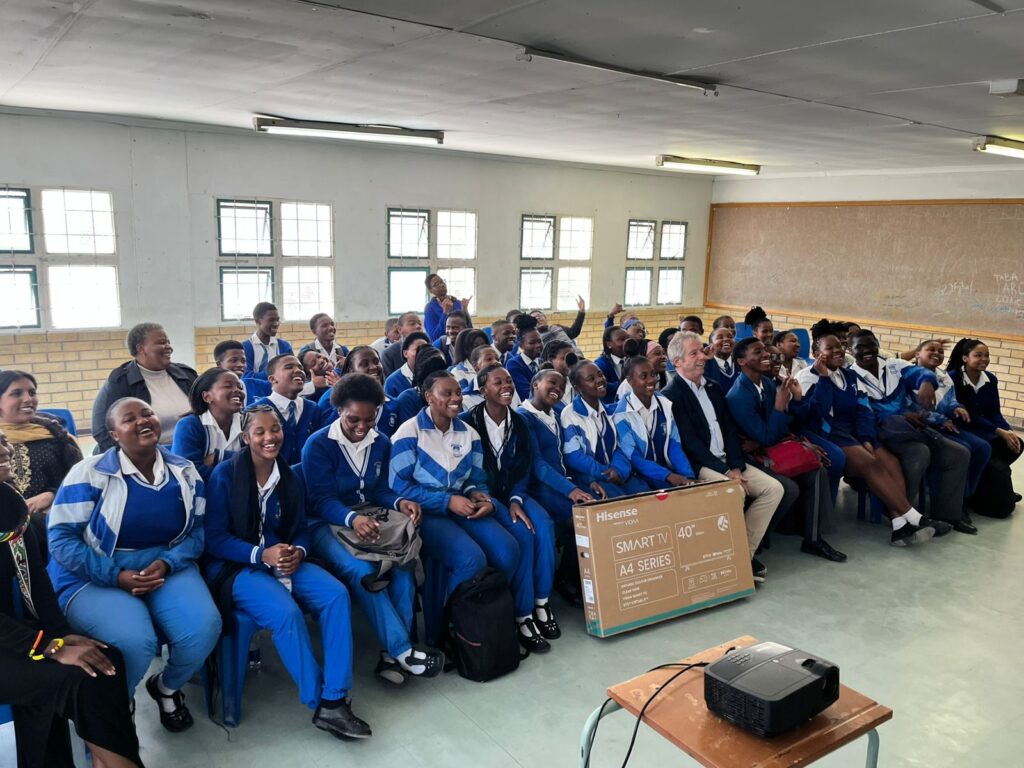
Naledi Ya Meso Lab addresses STEM education gaps by providing mathematics, physical science, and coding support to South African learners. The programme combines tutoring with hands-on Python activities using astronomy datasets, exposing learners to real scientific applications. Through mentorship and STEM career awareness, it aims to increase engagement, build skills, and create pathways for learners in under-resourced communities.
Rift Waters, Kenya
Rift Waters monitors the rapid expansion of lakes in Kenya’s Rift Valley, which has caused displacement and threatened ecosystems. The project uses Google Earth Engine to collect earth observation data and develop a predictive AI model to understand these changes.
Findings are shared through university workshops and community outreach with local officials. By providing insights to policymakers, the project helps mitigate the impact of flooding on rural lives, livestock, and wildlife.